
Acquiring an established Indian business can be a faster route to market than building from scratch — you inherit customers, licences, talent and operating history. But cross-border acquisitions in India sit at the intersection of company law, foreign-exchange regulation, tax and sector policy, so the path needs a structured roadmap from the outset.
This guide outlines how foreign companies and MNCs typically approach an Indian acquisition and where coordinated professional support matters most.
Why acquire rather than build
For many overseas acquirers, the decision comes down to speed and de-risking. An operating target already holds the registrations, vendor relationships and trained teams that would otherwise take quarters to assemble. Acquisitions also suit consolidation plays, technology or talent acquisitions, and entry into regulated sectors where a licensed platform is hard to replicate.
The trade-off is inherited liability. Unlike a greenfield setup, you take on the target’s historical tax positions, contracts and compliance gaps — which is why due diligence is central to the process.
Common deal structures
Foreign acquirers generally choose between a share purchase and a business (asset/slump sale) transfer.
- Share acquisition — buying equity in the Indian company. Simple in concept, but you inherit all historical liabilities.
- Asset or slump sale — acquiring a defined business undertaking, which can ring-fence certain legacy exposures.
- Merger or amalgamation — court/tribunal-approved combination, often used for group reorganisations.
- Investment with phased buy-out — a staged stake increase with agreed call/put mechanics.
The right structure depends on tax outcomes, liability appetite and the sector involved, and should be confirmed with appropriate professionals where required.
Approval routes and FEMA considerations
Foreign investment into India follows either the automatic route (no prior regulatory approval needed) or the government route (prior approval required), depending on the sector and the investee activity.
Note: confirm current automatic vs government route classification for the target’s sector and any sectoral caps — these change periodically and are subject to applicable law.
Pricing of shares in cross-border deals must respect foreign-exchange pricing guidelines, and the transaction triggers reporting obligations to the regulator. Sector-specific caps may limit the permissible foreign shareholding — the current cap for the relevant sector should be confirmed with appropriate professionals before signing.
Valuation and pricing norms
Cross-border acquisitions require a valuation by a registered professional, and the transaction price must comply with the applicable pricing methodology so that a non-resident does not acquire shares below — or exit above — the regulated fair value.
Note: confirm the prescribed valuation methodology and which categories of professional are authorised to issue the valuation certificate.
A typical acquisition roadmap
- Target identification and outreach — define the thesis and screen candidates.
- Letter of intent / term sheet — set indicative price and exclusivity.
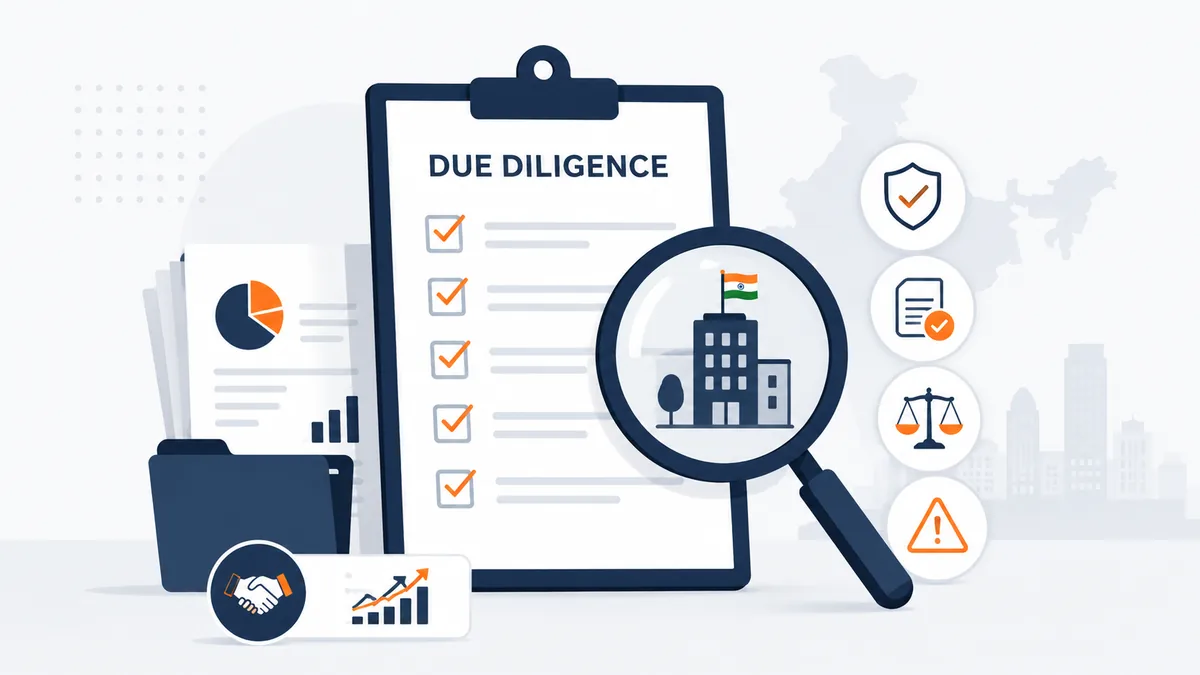
- Due diligence — financial, tax, legal, commercial and regulatory review.
- Definitive agreements — share purchase agreement, shareholders’ agreement, escrow and indemnities.
- Approvals and conditions precedent — regulatory clearances and consents.
- Closing and funds flow — completion against the agreed pricing and reporting.
- Post-merger integration — operations, finance, HR and compliance harmonisation.
Post-acquisition integration
Value is realised — or lost — after closing. A practical integration plan covers finance and reporting alignment, statutory compliance continuity, employee transition and retention, IT and data, and brand decisions. Building this plan during diligence, not after, materially improves outcomes.
Our team provides coordinated support across the full lifecycle through our India acquisition and takeover advisory.
Frequently asked questions
Can a foreign company own 100% of an Indian business? In many sectors, yes, under the automatic route — but several sectors carry caps or conditions. The permissible level depends on the activity.
How long does an India acquisition take? A mid-market deal commonly runs over several months from term sheet to closing, depending on diligence findings and any regulatory approvals required. Complex or regulated sectors take longer.
Do we need regulatory approval to buy an Indian company? It depends on the sector. Automatic-route sectors need no prior approval but still require post-transaction reporting; government-route sectors require approval before completion, subject to professional review.
Talk to our India desk
If you are evaluating an Indian acquisition, our India desk can help you structure the deal, run coordinated diligence and plan integration. Book a strategy call to discuss your thesis and the practical steps ahead.
Disclaimer: general information only, not legal/tax/financial advice. Rules, rates and thresholds change and are subject to professional review; engage appropriate professionals before acting.
Discuss this topic with our India desk
Get a practical read on how this applies to your company's India plans — in a 30-minute call with a senior advisor.