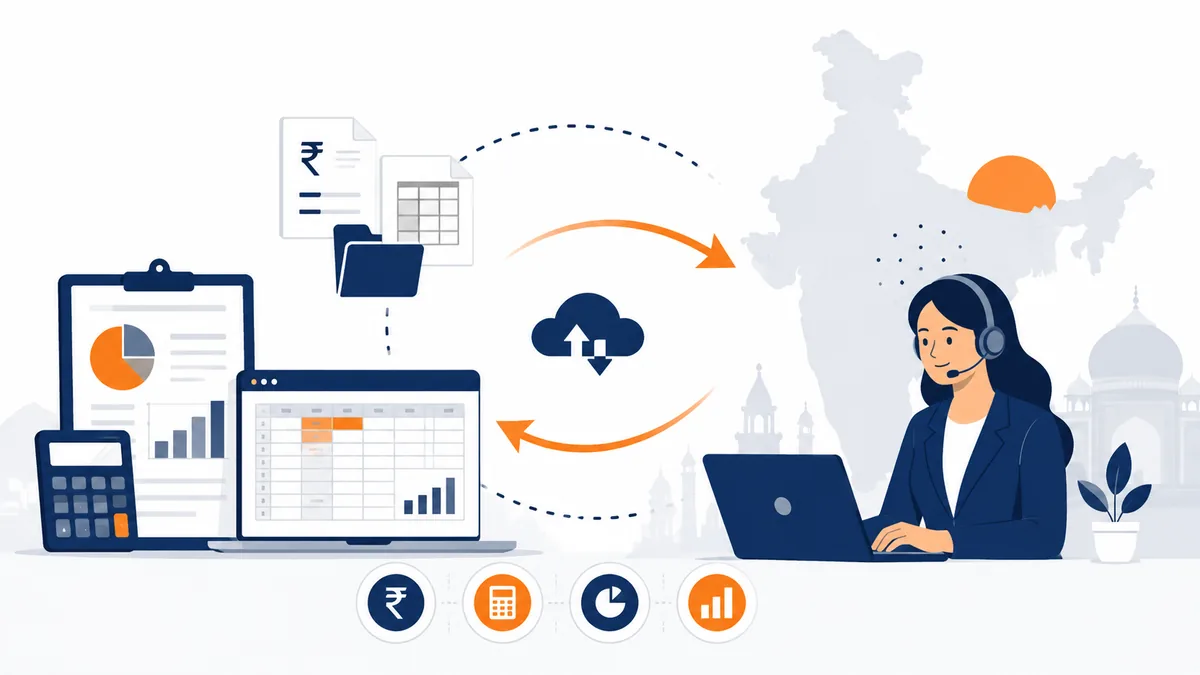

A remote India team gives foreign companies access to a deep, English-fluent talent pool across software, engineering, finance and operations — often with strong time-zone overlap into the working day of both Europe and the Americas. Done well, it is a strategic capability, not just a cost lever.
This guide walks foreign companies through the engagement models, hiring approach and compliance considerations for building a durable remote India team.
Why companies build teams in India
Beyond scale and cost efficiency, India offers depth in specialised skills, a mature services ecosystem and a workforce accustomed to working with global clients. For many companies the appeal is the ability to stand up a dedicated, long-term team that operates as an extension of headquarters rather than a transactional vendor relationship.
Choosing an engagement model
There are several ways to build a team in India, each with different control, cost and compliance profiles.
- Employer of Record (EOR) — a local entity employs staff on your behalf. Fast to start, no entity required, good for early or small teams.
- Managed or dedicated team — a partner recruits and operates a team aligned to your roadmap, handling local employment and administration.
- Own subsidiary (captive / GCC) — you incorporate in India and employ directly. Maximum control, best suited to larger, long-term teams.
The right choice depends on team size, time horizon and how much operational control you want to retain, subject to professional review.
Hiring and onboarding
A structured hiring process matters more remotely. Define role profiles tightly, use multi-stage technical and cultural assessment, and standardise onboarding so distributed hires reach productivity quickly. Compensation should be benchmarked to local market levels for the relevant skill and city.
Compliance and payroll
Even a remote team triggers local obligations. Depending on the model, these may include employment contracts compliant with Indian law, payroll processing, income-tax withholding, and social-security contributions such as provident fund and gratuity.
Note: confirm applicable payroll, withholding and social-security obligations and contribution rates — subject to professional review and changeable by jurisdiction.
Permanent-establishment and tax-residency questions can arise where remote staff perform certain functions on behalf of the foreign company, so the structure should be reviewed with appropriate professionals where required.
Managing a distributed team well
Productivity comes from operating rhythm, not headcount. Effective remote India teams typically rely on:
- Clear ownership and outcome-based goals rather than activity tracking.
- A defined overlap window for live collaboration across time zones.
- Documented processes and asynchronous communication norms.
- Regular career development and retention focus, given competitive talent markets.
- A single point of accountability bridging headquarters and the India team.
Retention in a competitive market
India’s skilled-talent market is mobile, so retention deserves deliberate attention: market-aligned compensation, growth paths, meaningful work and inclusion in the broader company culture. Treating the India team as core — not peripheral — is the strongest retention lever.
Our team provides coordinated support to build and run remote teams through our hire software engineers in India service.
Frequently asked questions
Do we need an Indian entity to hire a remote team? Not necessarily. An Employer of Record or managed-team model lets you start without incorporating. A subsidiary makes sense as the team scales and you want direct control, subject to professional review.
Will a remote India team create a taxable presence for us? It can, depending on the functions performed and the engagement model. Permanent-establishment risk should be assessed for your specific facts with appropriate professionals.
How much time-zone overlap is realistic? India’s working day overlaps comfortably with European hours and the early part of US Eastern hours, enabling a daily live collaboration window with most regions.
Talk to our India desk
If you are planning a remote India team, our India desk can help you choose an engagement model, hire and stay compliant. Book a strategy call to map out your build.
Disclaimer: general information only, not legal/tax/financial advice. Rules, rates and thresholds change and are subject to professional review; engage appropriate professionals before acting.
Discuss this topic with our India desk
Get a practical read on how this applies to your company's India plans — in a 30-minute call with a senior advisor.